Coating Over Shingles: When It Works, and When It Doesn't
Spraying a polyurea membrane over an existing shingle roof can eliminate a tear-off, a dumpster, and a week of exposure. It can also be a waste of money on the wrong roof. OR-80SLM Silver Lining Membrane over 7001 Primer is the system — this site is about honestly telling the two situations apart.
Find Out If Your Roof QualifiesWhat a Shingles Coating Actually Buys You
The Old Roof Stays Where It Is
No tear-off means no disposal fees, no dumpster in the driveway, no days of the building standing open under a tarp, and no discovery of a surprise once the deck is exposed. On a qualifying roof this is the largest single line item that simply disappears from the estimate.
Every Seam and Nail Head Disappears at Once
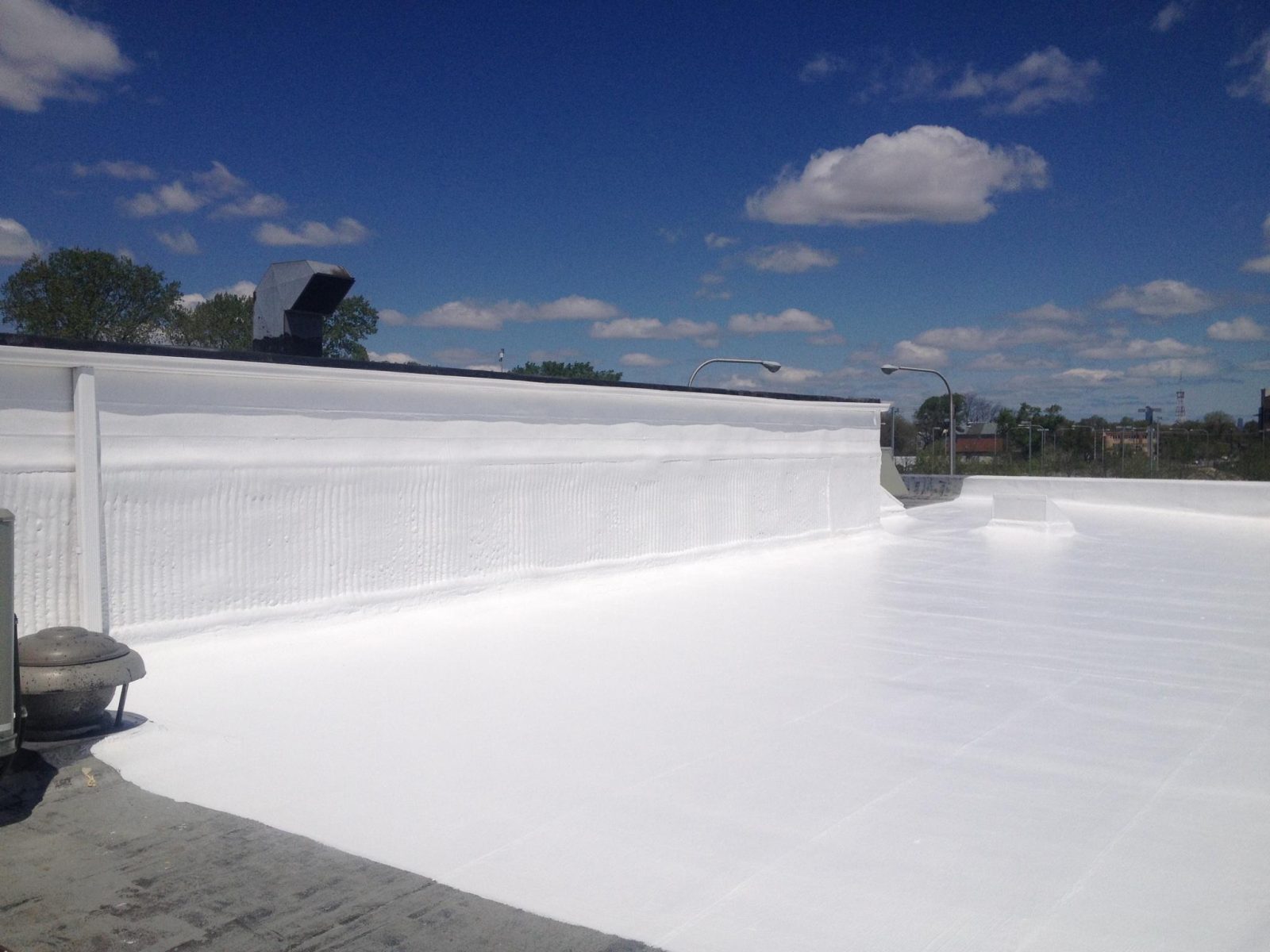
A shingle roof is hundreds of overlapping units and thousands of fasteners. A sprayed membrane covers all of it as one continuous elastic sheet, including the valleys, the vent boots, and the roof-to-wall transitions that are usually where the water was actually getting in.
It Is Maintenance, Not a Capital Project
For commercial and rental property owners this distinction matters as much as the price. A restoration coating is typically treated as a maintenance expense against the existing asset rather than a capital replacement — and it happens without vacating or disrupting the building.
You Get a Membrane, Not Another Recoat Cycle
Acrylic and asphalt-emulsion shingle coatings are maintenance products on a repeating schedule. OR-80SLM is 100% solids pure polyurea at 50–60 mil with 300–400% elongation — a waterproofing layer, not a seasonal refresh.
Shingle Roofs Worth Coating
The pattern is consistent: sound shingles, a solid deck, and a leak problem that lives in the details rather than the field.
- Low-slope shingle sections
- Rear & side slopes out of view
- Porch, dormer & addition roofs
- Rental & investment property roofs
- Garages, shops & outbuildings
- Small commercial shingle roofs
- Sound roofs with granule loss
- Roofs leaking at valleys or boots
- Storm-patched roofs still watertight
- Roofs where tear-off is impractical
The Restoration System
Four products, and one of them is doing more work than people expect.
The Honest Version First
Most companies selling shingle coatings lead with the savings. We are going to lead with the disqualifiers, because if your roof is in this list nothing further on this site will help you.
Do not coat over shingles if:
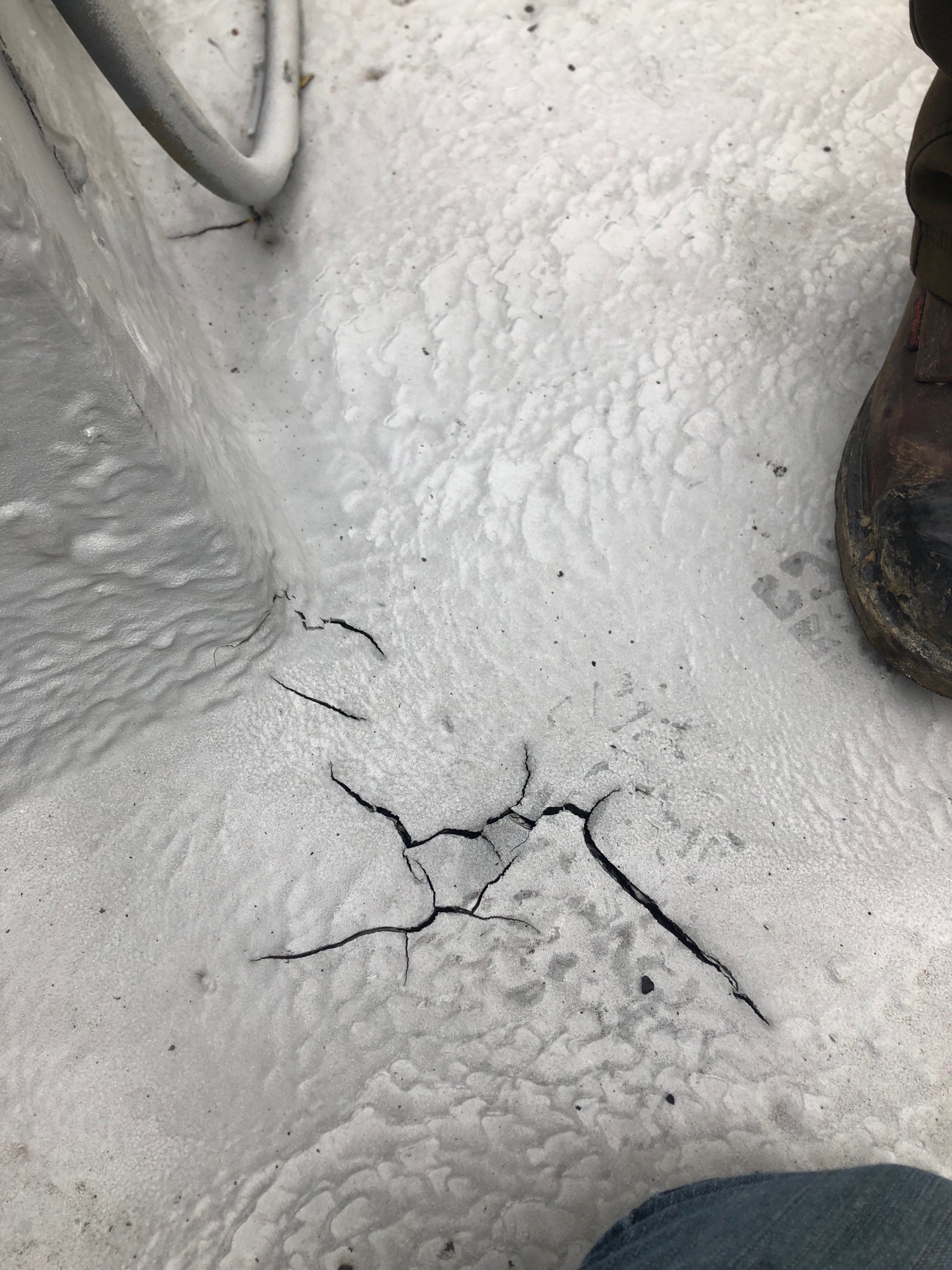
- The shingles are curled, cupped, cracked, or brittle enough to snap when you lift them. The membrane bonds to what it is sprayed on. If that layer is leaving, your new roof leaves with it.
- The deck is soft, spongy, or delaminated. Coating is waterproofing, not structure. Walk it — if it moves under you, it needs carpentry, not chemistry.
- There are two or three layers of shingles already on the roof. Weight, movement between layers, and unknown condition underneath make this a tear-off.
- The attic is unventilated or already has a moisture problem. A monolithic membrane means the deck can no longer dry upward. Fix the ventilation first or do not do this at all.
- It is the front slope of a house in a neighborhood that cares how roofs look. The finished surface is smooth and uniform. It will not read as shingles from the street, and no technical argument changes that.
Roughly a third of the roofs people ask us about fall into one of those categories, and we tell them so. The other two thirds are excellent candidates.
Coating vs. Tear-Off — What Actually Differs
| Property | Value |
|---|---|
| Old roof disposal | Coating: none. Tear-off: dumpster + landfill fees |
| Building exposure | Coating: never opened. Tear-off: open deck, weather risk |
| Time on site | Coating: 1–3 days. Tear-off: 3–7+ days |
| Surprise repairs | Coating: known before you start. Tear-off: discovered mid-job |
| Accounting treatment | Coating: usually maintenance. Tear-off: usually capital |
| Result at valleys & boots | Coating: seamless. Tear-off: new flashing, new joints |
| Appearance | Coating: smooth uniform surface. Tear-off: shingle look retained |
| Structural problems | Coating: does not address them. Tear-off: exposes and fixes them |
| Wet or rotted deck | Coating: disqualifying. Tear-off: the correct answer |
| Remaining shingle warranty | Coating: generally voided. Tear-off: replaced with a new one |
What a Good Candidate Looks Like
The roofs that restore beautifully share a profile. The field of the roof is tired but intact — granule loss, some fading, maybe twenty years of sun, but the shingles still lie flat and still flex without cracking. The deck is solid. And the leaks, when there are leaks, are all in the same places: a valley, a vent boot, the step flashing where the addition meets the wall.
That last part is the tell. Water almost never comes through the middle of a shingle field. It comes through the details. A tear-off replaces the field — which was fine — and rebuilds the details with new flashing and new joints that will eventually age the same way. A sprayed membrane eliminates the details entirely by running continuously over them.
Low-slope sections are the strongest case of all. Shingles are marginal below about 4:12 to begin with and were never really designed for it, which is why so many of these sections are the leaking part of an otherwise fine roof.
By the Numbers
Send Photos and We Will Tell You Which Roof You Have
Three photographs — a close-up of the shingle surface, one of the worst leak area, and one of the whole roof — plus the approximate age and square footage. We will tell you plainly whether it is a coating candidate or a tear-off. We have no reason to be diplomatic about it.
Get an Honest AssessmentFind Out If Your Roof Qualifies
Tell us about your project and we will follow up with product details, technical data sheets, and pricing.
Frequently Asked Questions
Questions About Coating Over Shingles
Including the uncomfortable ones.
Does It Actually Work?
Can you really spray a coating over asphalt shingles?
Yes, on a qualifying roof, and it is done routinely. The requirements are specific: shingles that still lie flat and flex without cracking, a sound deck, adequate attic ventilation, and 7001 Primer as a bleed-block over the asphalt. Meet those and you get a genuine waterproofing membrane. Miss any of them and you get a failure that people will blame on the concept rather than the shortcut.
Why do I keep hearing shingle coatings do not last?
Because most of what has been sold in this category is thin acrylic or asphalt emulsion — maintenance products on a recoat cycle, often applied over roofs that needed replacing and often without a primer. That is a different product doing a different job. OR-80SLM is 100% solids pure polyurea at 50–60 mil with 2,500 PSI tensile strength. Judge the category by the material and the prep, not by the worst version of it.
Will it stop a leak I have already had for years?
It will stop water entering through the roof surface, including at valleys, boots, and wall transitions. It will not fix a leak that is actually coming from a chimney crown, a sidewall, a window above the roofline, or condensation in the attic. Long-running leaks are worth diagnosing properly before anyone sprays anything — a membrane over a misdiagnosed leak is an expensive way to learn where the water was really coming from.
How long does it last compared to a new shingle roof?
A properly prepped polyurea membrane at correct thickness is a long-service roofing layer, not a coating on a recoat schedule. The realistic limiting factor is usually the substrate underneath rather than the membrane — which is exactly why we are strict about which roofs qualify. A membrane cannot outlive the shingles it is bonded to.
Practical Concerns
Does coating trap moisture in the roof?
It can, and this deserves a serious answer. Once the roof is a continuous membrane, the deck can no longer dry upward through the shingles. If the attic is properly ventilated, drying happens from below and this is a non-issue. If the attic is unventilated, poorly ventilated, or already showing condensation, the ventilation must be corrected first. Do not skip this. It is the one failure mode that is invisible from the roof surface.
Does the added weight matter?
A 60-mil polyurea membrane adds modest weight compared to a second layer of shingles, and on a single-layer roof with sound framing it is not a structural concern. On a roof that already carries two or three layers, weight is one of several reasons the answer is tear-off. If the framing is marginal for any other reason, have it evaluated.
Does this void my shingle warranty?
Generally yes. Applying anything over shingles typically voids whatever remains of the manufacturer warranty. In practice this is most relevant on newer roofs — and a newer roof is rarely a restoration candidate anyway. On a fifteen- to twenty-five-year-old roof there is usually little or no meaningful warranty left to forfeit. Check yours before deciding.
What if I want to sell the house later?
Be prepared to explain it. A coated shingle roof is unfamiliar to many home inspectors and appraisers, and unfamiliar reads as a question mark. Keep the documentation — product data sheets, the spec, photos of the prep. On rentals, commercial buildings, and outbuildings this matters much less than on an owner-occupied home in a conventional neighborhood.
Cost & Getting It Done
How much does it cost compared to tearing off?
Restoration is generally meaningfully less than tear-off and replacement, and the gap widens as disposal and access get more expensive — tight lots, no dumpster space, solar arrays, or occupied buildings. It is not, however, a budget product: this is real polyurea at real thickness sprayed by a trained applicator. If someone is quoting a shingle coating at paint prices, they are selling you paint.
How much material does a shingle roof take?
More than the plan area suggests. At 100% solids, one gallon yields 1,604 mil-sq-ft, but a granular, stepped shingle surface has substantially more real area than its footprint — budget 20 to 30 percent above the flat-surface calculation, plus primer. Send us the square footage and slope and we will run the takeoff.
Can I do this myself?
Not with this material. Polyurea requires a plural-component proportioner with a heated hose that meters both components precisely at temperature and pressure. Off-ratio material never develops its properties and cannot be corrected afterward. We can refer you to a trained applicator, or if you are a contractor, walk you through the equipment.
What time of year can it be applied?
A wide window, wider than most roof coatings. Pure polyurea gels in seconds and is not moisture-sensitive during cure, so humidity has little opportunity to affect the film. The real constraint on shingles is getting the roof genuinely dry beforehand — shingles hold water in the mat, and that is what governs the schedule in a wet season.
Ask Us Something Harder
If you are trying to talk yourself out of this, we will help. A straight answer is worth more to us than one job.
Ask a Question