The System & the Finish
What goes on the roof, in what order, and what it looks like when it is done.
Request the Spec SheetWhy 7001 Primer Is Non-Negotiable Over Asphalt
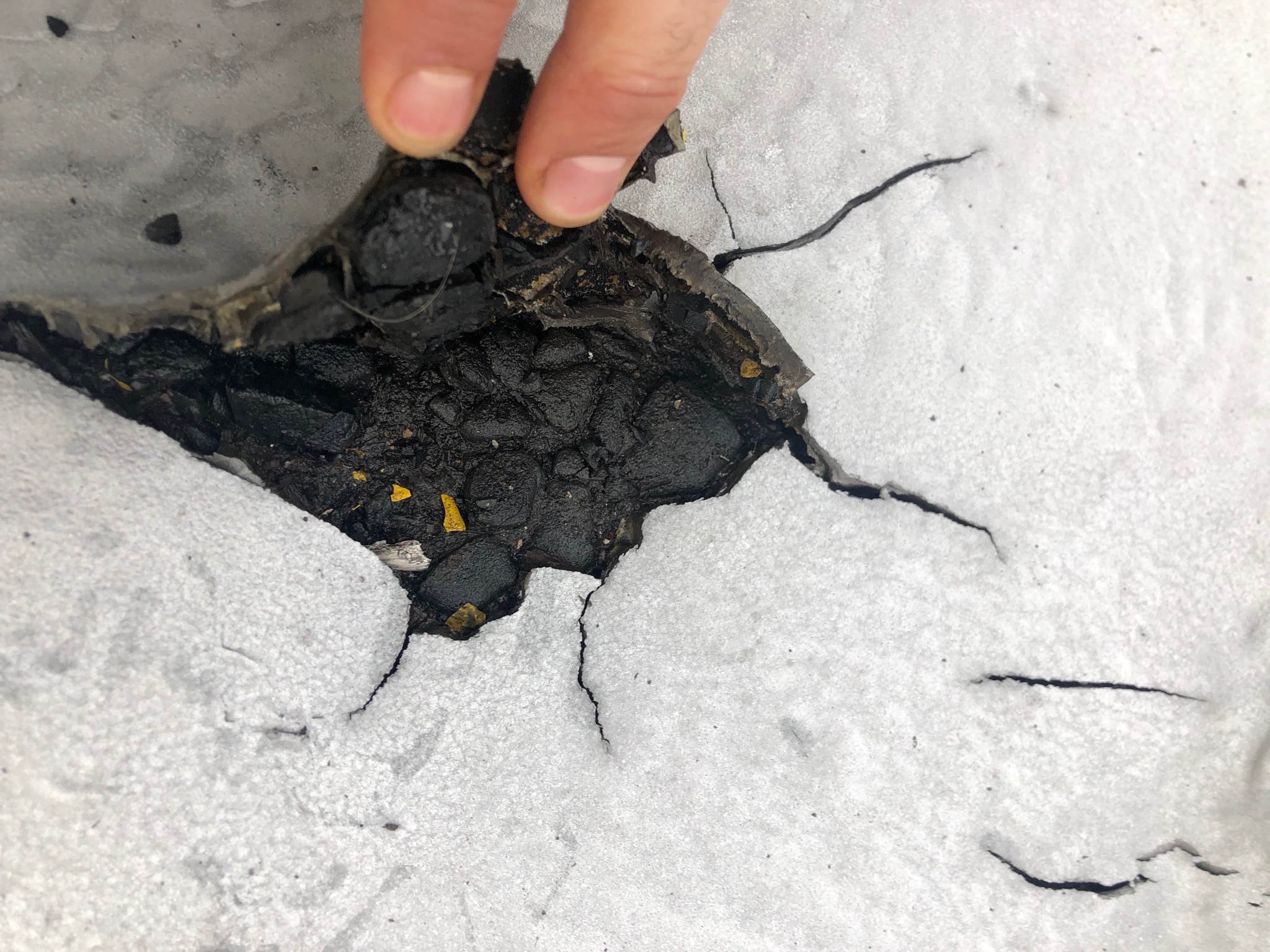
Of all the substrates a polyurea membrane goes over, asphalt shingles present the one problem that is unique to them: the substrate contains oils that want to migrate.
Put a coating directly on aged asphalt and, over the following weeks, those oils travel up into the film. The result is softening, staining, and in bad cases a membrane that never fully hardens in the affected areas. The roof looks perfect on completion day and looks wrong a month later. This is the single most common reason a shingle coating job goes bad, and it is entirely preventable.
7001 Primer is a quick-set, multi-surface adhesion primer that does two jobs here simultaneously. It bonds to the aged, granular shingle surface — including the residual granules that a pressure wash leaves behind — and it acts as a barrier that the asphalt oils cannot cross.
There is a second reason it matters on shingles. A shingle surface is not flat; it is a stepped, textured, absorbent plane with vastly more actual surface area than its plan dimension. The primer wets that texture out and gives the membrane a consistent surface to build on, rather than asking it to bridge a granular landscape on its own.
OR-80SLM Over Shingles — Specification
| Property | Value |
|---|---|
| Membrane type | Pure polyurea, 100% solids |
| Approval | Miami-Dade approved |
| Primer | 7001 Primer — required over asphalt |
| Field DFT over shingles | 50 – 60 mil |
| Valleys, boots & transitions | OR7K at 60 – 80 mil, applied first |
| Traffic / hail zones | FJ1 at 80 – 100 mil |
| Elongation | 300 – 400% |
| Tensile strength | 2,500 – 3,000 PSI |
| Tear strength | 400 – 500 pli |
| Gel time | 3 – 6 seconds |
| Tack-free time | 10 – 30 seconds |
| Service temperature | −40°F to 250°F |
| Coverage | 1,604 mil-sq-ft per gallon (add 20–30% for shingle texture) |
| Equipment | Plural-component proportioner, heated hose |
Preparation, in Order
- Inspect and walk the whole roof. Soft spots, cupped shingles, multiple layers, and deck movement are found now, not after material is on site.
- Repair or replace. Curled, cracked, and missing shingles come off and get replaced. Lifted nails are reseated. Rotten decking is cut out. This is roofing work and it happens before any coating work.
- Pressure wash. Loose granules, algae, moss, and accumulated dirt all have to go. Anything that comes off under water pressure would have come off under a membrane.
- Dry completely. Shingles are absorbent and hold water in the mat. Coating a damp roof produces blisters on the first hot afternoon — this step is not negotiable and it is where schedules slip.
- Confirm attic ventilation. Once the roof is a continuous membrane the deck can only dry downward. Inadequate ventilation turns a good coating into a moisture trap.
- Prime with 7001. Full surface, including valleys and up onto vertical transitions.
- Detail first, then field. OR7K on valleys, boots, chimney and wall transitions, eave and rake terminations. Then OR-80SLM across the field, tied in within the six-hour recoat window so it bonds chemically to the detail work.
Color, Finish & Reflectivity
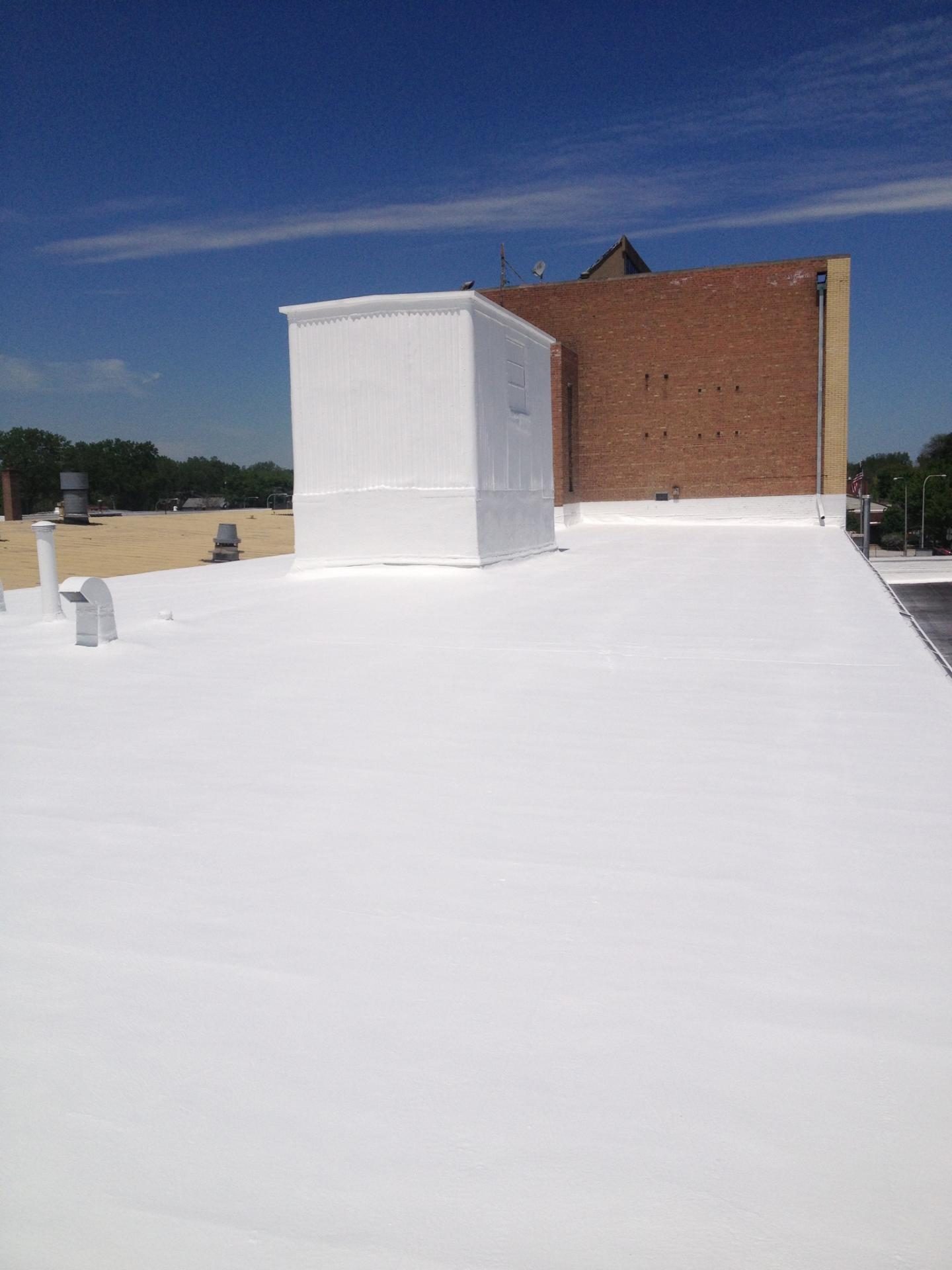
Expect a smooth, uniform, matte-to-satin surface in a single solid color. It follows the contour of the shingles slightly — you will see the courses as a gentle relief rather than a flat plane — but it does not read as individual shingles. Set that expectation with the homeowner before the job, not after.
The practical upside is thermal. A dark, aged asphalt shingle roof is one of the hottest surfaces on a building, and a light-colored membrane meaningfully reduces peak surface temperature. That is not just an energy argument: it also shrinks the daily expansion-and-contraction cycle that has been fatiguing the roof for twenty years.
On UV: aromatic polyurea chalks and lightens in direct sun over time. It is cosmetic — waterproofing and physical properties are unaffected — but where long-term appearance or sustained reflectivity is part of the value, we specify a reflective aliphatic topcoat over the membrane that holds its color.
Want the Full Data Package?
TDS and SDS for OR-80SLM, OR7K, and 7001 Primer, plus an application guide written specifically for asphalt shingle substrates.
Request DocumentationFind Out If Your Roof Qualifies
Tell us about your project and we will follow up with product details, technical data sheets, and pricing.